

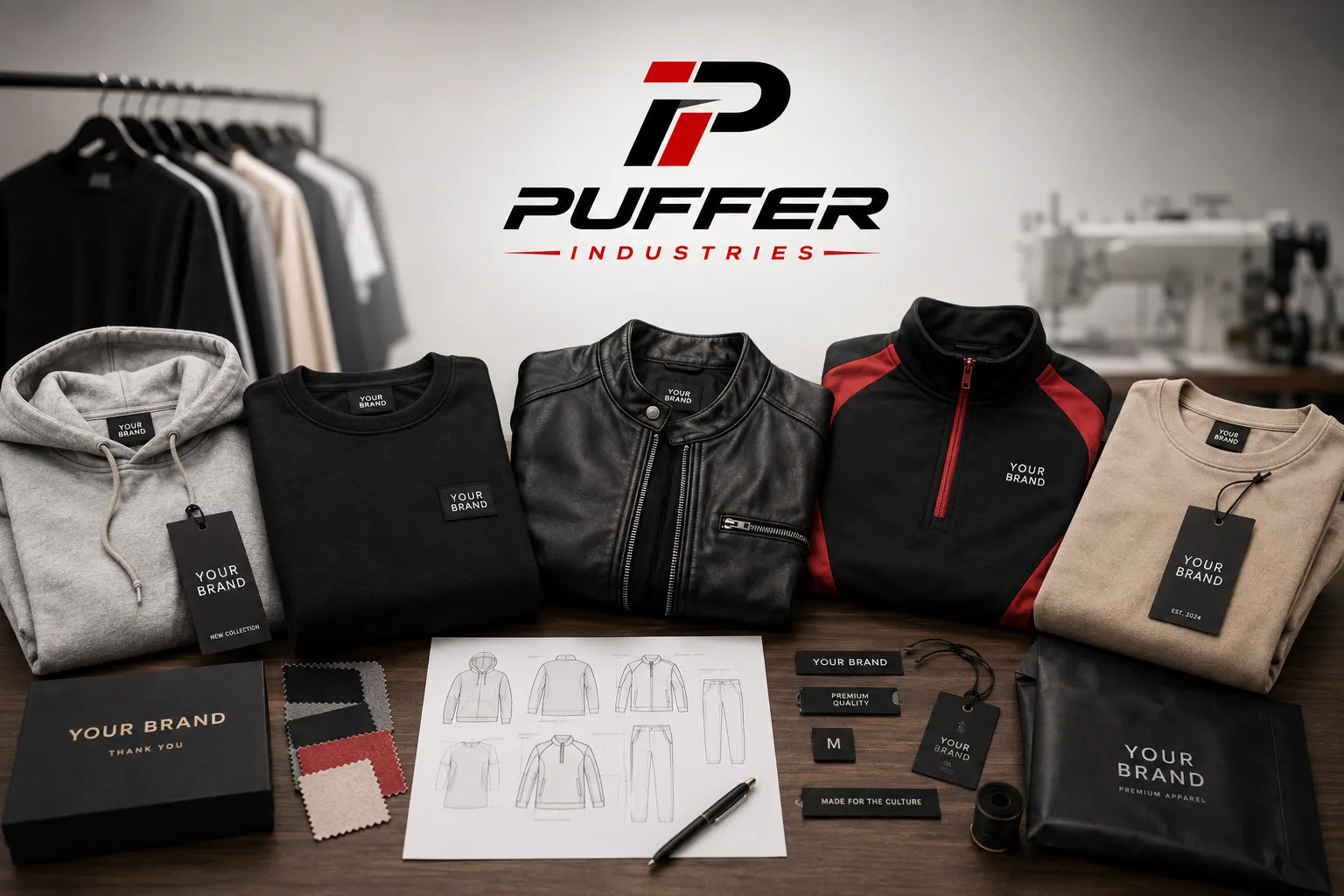
Building a clothing brand involves much more than creating attractive designs. Brands also need reliable manufacturing, consistent product quality, professional branding, and a production process that can support future growth.
Private-label clothing manufacturing gives businesses an opportunity to develop apparel under their own brand identity while working with an experienced manufacturing partner.
For startups, fashion labels, retailers, and established businesses, private labeling can provide a practical way to create a distinctive clothing collection.
What Is Private Label Clothing?
Private-label clothing refers to garments manufactured for a business and sold under that business’s own brand.
Instead of selling generic products, a brand can customize elements such as:
- Garment designs
- Fabrics and colors
- Fits and measurements
- Logos
- Woven labels
- Neck labels
- Hangtags
- Packaging
- Printing and embroidery
- Other finishing details
The result is a product designed around the identity and requirements of the brand.
Why Choose Private Label Manufacturing?
One of the biggest advantages of private-label manufacturing is brand control.
A business can develop a collection that reflects its own aesthetic rather than relying entirely on products already available in the market.
Private-label manufacturing can also help brands create consistency across their collections. Colors, fits, logos, labels, packaging, and other details can be developed according to a unified brand direction.
Choosing the Right Products for Your Brand
The right product range depends on your target customer and brand positioning.
Casual Wear
Casual apparel is versatile and suitable for brands focused on everyday clothing. T-shirts, hoodies, sweatshirts, jackets, and other lifestyle garments can form the foundation of a private-label collection.
Leather Apparel
Leather jackets and other leather garments can create a premium and distinctive product offering. Material selection, construction, hardware, stitching, and finishing are especially important in this category.
Sportswear
Sportswear is an excellent choice for brands targeting athletes, fitness customers, teams, and active lifestyles. Products can be customized around performance requirements as well as visual branding.
Streetwear
Streetwear brands often compete through design, identity, and originality. Custom silhouettes, graphics, embroidery, washes, colors, and branding can help create a recognizable collection.
The Private Label Manufacturing Process
Although every project is different, the process generally starts with understanding the brand’s requirements.
1. Product Brief
The brand provides its product idea, reference images, sketches, tech pack, or specifications.
2. Product Development
The manufacturer reviews the requirements and determines the materials, construction, measurements, branding, and other production details.
3. Sampling
A sample is developed so the brand can review the product before bulk production.
4. Approval
The brand reviews the sample and provides any required adjustments.
5. Bulk Production
Once the product is approved, manufacturing can move into bulk production according to the agreed specifications.
6. Finishing and Packaging
Labels, tags, branding, packaging, and other finishing requirements are completed according to the brand’s instructions.
What Should Brands Provide to a Manufacturer?
The more clearly a product is defined, the easier it is to manufacture consistently.
Useful information can include:
- Product sketches or reference images
- Tech packs
- Measurement charts
- Fabric preferences
- Color references
- Logo files
- Artwork
- Branding requirements
- Label specifications
- Packaging requirements
- Expected quantities
- Target delivery schedule
If you don’t have a complete tech pack, you can still begin with a product concept and discuss the requirements with your manufacturing partner.
Why Manufacturing Quality Matters
Your manufacturer directly influences the quality customers experience when they purchase your products.
Consistent stitching, accurate sizing, appropriate materials, clean finishing, and reliable branding can all contribute to a stronger final product.
For this reason, choosing a manufacturer should not be based solely on price. Brands should also consider communication, craftsmanship, customization capabilities, quality control, and the manufacturer’s ability to understand their product requirements.